显示标签为“flour processing plant”的博文。显示所有博文

2017年11月27日星期一

Why Stone Flour So Popular

With the social and economic progress and people's living standards increasing, people's requirements for food quality are getting higher and higher, more and more people begin to attach importance to food taste and nutrition. Stone mill flour production of low-temperature and low-speed grinding of flour, not only retained the nutritional value of wheat itself, and the taste is flexible, rich wheat, as people's first choice.
http://www.wheatmillmachinery.com/solution/why-stone-flour-so-popular.html

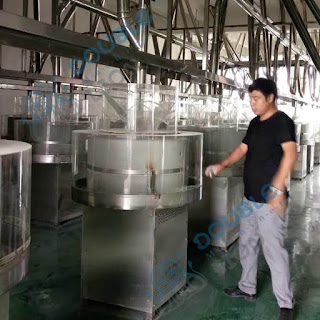
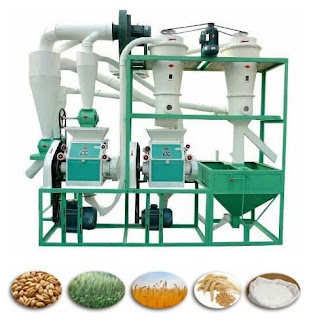
Stone flour processing equipment is a traditional grinding tools, stone flour milling machine because of low temperature, low-speed grinding makes the flour nutrients are preserved. At the same time, due to the combination of modern technology and stone grinding, there have been many types of stone flour milling machines. There is a single stone flour milling machine and a stone flour milling plant, which greatly increases the output of stone flour. For daily production, the stone mill flour mill can grind wheat 75 kg per hour, two-roller stone flour mill grind wheat 150 kg per hour. These are based on the specific use of our production, the amount of processing different, the price of flour machine is different.

Why Stone Flour So Popular-Hot sale of Stone Grinding Mills at best price

Stone flour machine advantages
  • 1.Stone flour mill grinding natural stone flour: low temperature grinding, taste and flexibility, rich wheat, higher nutritional value, is a real natural green health food!
  • 2.Stone flour mill using the ancient stone and traditional hand-made process. Do not add any additives, is the real pure natural green pollution-free flour.
  • 3.The low speed grinding characteristics of the stone flour machine keep the molecular structure of the flour intact. Therefore, its pink pure nature, high degree of gluten, smooth and delicate, original pure wheat flavor, the advantages of easy absorption of nutrients.
  • 4.Stone flour mills do not require any additives. When cooking noodles, stone flour noodles are light yellow in stone flour, while white flour noodles with other additives are white in color. Stone flour machine to retain the original wheat.
  • 5.Stone pasta machine made of various pasta taste flexible, rich wheat, higher nutritional value, is truly a natural green health food.
  • 6.Flour out of the stone flour mill is different, the speed of the stone mill only a dozen per minute, the heat generated by the machine is much less, to retain the original wheat.
  • 7.The modern people of pure natural green food, and after the full time, stone flour machine came into being and into people's lives.
  • 8.The flour processed by the stone flour machine retains 12 kinds of vitamin nutrients such as protein, carbohydrate, fat, calcium, phosphorus, iron, vitamin B1 and B2 in wheat, and the stone flour machine contains necessary human body Vitamin E content 18 times higher than machined flour.

Wheat flour is one of the main foods, and the flour milling equipment produces flour nutrients several times more than conventional flour mills.At the same time, due to the change of people's life concept and diet concept, healthy, small and fine quality flour has become the object sought after by people.Stone mill production equipment processing concepts and modern concepts of health consistent, is the pursuit of people, so the chance of stone flour by everyone's welcome!

Why Stone Flour So Popular-Hot sale of Stone Grinding Mills at best price

Why Stone Flour So Popular-Hot sale of Stone Grinding Mills at best price

Why Stone Flour So Popular-Hot sale of Stone Grinding Mills at best price

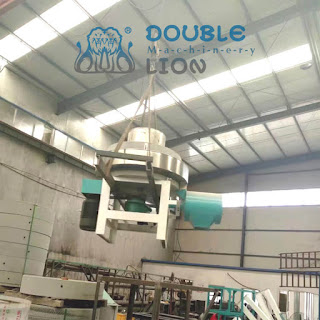
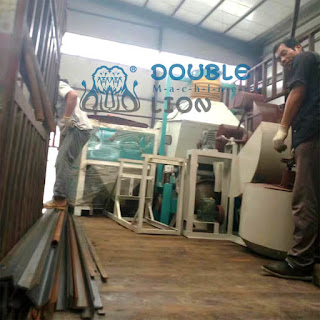
                                                        Stone Flour Machine Delivery

Zhengzhou Double-lion Grain & Oil Milling Machinery Co.,ltd. is dedicated in flour mills and flour milling lines design & manufacturing. Cooperating with Henan University of Technology (Former Zhengzhou Grain College) which have abundant talented person and science advantage, it has carried out the new technological research and application of oil machinery, flour milling machinery, coarse cereals machinery and feed machinery, etc., and transformed the latest scientific achievements into productive forces to obtain good social and economic benefit. Many foreign friends have established long-term cooperative relationship with us. Our company has wide milling machines range and competitive price, looking for sales agents overseas!

Need guidance to build a maize flour plant? Please contact us, our engineer will give you professional guidance and suggestion.
Type: wheat flour mill machineflour mill plantssmall scale flour processing plantcorn flour mill machine, grain mill, maize machine. Get in touch with us.

How to Get in Touch with Zhengzhou Double lion Flour Mill Manufacturer
Email: info@zzdoublelion.com
Whatsapp: +8613849022317 (Sophia)
Wechat: +8613849022317 (Sophia)
Add:Lotus street NO.100,Hi-tech development zone, Zhengzhou, Henan, China.

2017年9月7日星期四

How To Start a Small Scale Flour Milling Business?

Almost all the junk foods we eat these days are made from flour; Cake, Burger, Pizza, Doughnut, name them, are all made from flour. There are different types of flours and each of type of flour is dependent on the raw material used to produce the flour.
For instance, wheat flour is made from wheat, corn flour is made from corn/maize; then there are others like rice flour, cocoyam flour and yam flour and my guess is that you know the raw materials each of these types of flour are made from.
Starting a flour company is a very profitable business that can break even after a few years due to the high demand for flour by companies that use flour as raw material to produce other finished products.
Are you planning to start a small scale flour milling business? Well, starting and running a milling business is not an easy task. Despite the high returns that this business can yield at the end of the day, there is a lot that you need to do in order to rise to the top. There are a number of things you need to know before opening the doors of your small scale flour milling business in any part of the city. Here are simple steps that will get started without going through much hassle over the same.
How To Start a Small Scale Flour Milling Business

The Plan of Starting a Flour Milling Business


1.Training on How to Handle the Machineries for Production

Unless you have worked in a flour mill before now, you need to get the basic training on how to handle the machineries used in the grinding and further production of the raw materials into finished flour. You also need to know other ingredients that are added to get the final result.

2.Register Your Business as a Company:
You may not start out as a massive flour mill, but you have a dream of expanding the company to a flour mill one day, so you need to register your business as a company; preferably a limited liability company. This also gives you the privilege to patent any new flour product you invent to your company’s name.

3.Lease a Space for Your Factory
When you are done with the formal registration, you have to look for a space to buy or rent as your factory complex. A basic flour mill doesn’t require much space to get started.
You need mainly a place to keep the raw materials, a space for your machineries, a space to keep the processed flour for packaging, and the space for the final packaging of the flour. The location of the factory should be easily accessible for easy transport of raw material into the site and easy shipping out of packaged flour to customers.

4.Purchase Equipments and Materials
Once you get the space for the factory, it’s time to buy the equipments and machineries you will need for production. Part of the need for going for training is to know which equipments are vital for the product of flour and how to use each of them. You can also lease machineries if the company is running on a very tight budget, but endeavor to purchase your own set ones you make enough money.

5.Source for Raw Materials
It is time to scout for raw materials you need for production. As I mentioned above, the raw material you will need depends on the type of flour you are producing. A good place to source for raw materials is from farmers that cultivate the raw materials in commercial quantities.
If you have the extra expanse of land, you may decide to cultivate your own raw material which may be cheaper but more stressful with the whole cultivation, nurturing, waiting to mature and finally harvesting processes. So it is much better to purchase from farmers.

6.Find Customers for Your Products
At this stage, I assume that the first set of flour production has been done and packaged; so you have to look for buyers for the finished product.
A good way to do this is to get a list of bakeries, food processing companies and pharmaceutical companies near your location; write a proposal to them that you have a flour company that can supply them with any quantity of flour they require.
Also include a small sample of the flour you made to them for them to see the product you have and finally, let them know that you can produce other types of flour on order (if you have the equipment to produce various types of flour).
This is all you need to know about starting a flour production mill. Please note that you need to get certification from the organization responsible for checking the quality of food products in your location, as it will help to increase the authenticity of your product to your customers.
Also, remember that the packaging process includes using a bag or sack that is branded with your company’s name and logo to package your flour; as this helps to advertise your products to anybody that comes in contact it.

Here are some basic requirements of plant & machinery

  • Bucket elevator
  • Drum sieve pre-cleaning machine
  • High-frequency vibration cleaning sieve
  • Wheat cleaning & drying machine
  • Destoner
  • Wheat scourer
  • Permanent Magnetic Drum
  • Atomizing Dampener
  • Pneumatic flour mill machine
  • Flour cleaning machine
  • Plansifter
  • Square plansifter
  • Bran scourer
  • Bran Brush Machine
  • Centrifugal fan
  • Pulse dust collector

Generally, a flour mill project comes with a lot of customization. According to your investment capacity and desired output quantity, you must install the machinery. Additionally, you will need to have testing equipment and packaging machinery.

How To Start a Small Scale Flour Milling Business

 Flour Production Process & Raw Materials
The production process of each item is little bit different. You can source the manufacturing technology from the Govt. department in exchange of certain fees. However, here we put basic steps of flour production.
First of all, clean the wheat grains thoroughly to remove dust, stone and other foreign matters. Then temper the grains before grinding by treating with water so that the bran is separated from the endosperm.
Crush the wheat between corrugated rollers (Break rolls). It is a long process and may contain several breaks. The stock contains pieces of endosperm and bran and the stock from the last break is principally bran.
The middlings contain endosperm, bran and germ which are then successively classified and some of the bran removed are sent to reduction rollers. These are smooth rollers, but like the break rolls they are graduated so that successive reduction becomes finer and finer.
After each reduction, sifters separate the flour, middling and stock. And you have to continue the process until you can remove the most of the endosperm as flour. Additionally, you have to separate the most of the bran in the sifters.
The major required raw material is wheat blended in different proportion. Additionally, you have to procure the packaging materials for flour mill business.

Zhengzhou Double-lion Grain & Oil Milling Machinery Co.,ltd. is dedicated in flour mills and flour milling lines design & manufacturing. Cooperating with Henan University of Technology (Former Zhengzhou Grain College) which have abundant talented person and science advantage, it has carried out the new technological research and application of oil machinery, flour milling machinery, coarse cereals machinery and feed machinery, etc., and transformed the latest scientific achievements into productive forces to obtain good social and economic benefit. Many foreign friends have established long-term cooperative relationship with us. Our company has wide milling machines range and competitive price, looking for sales agents overseas!

How To Start a Small Scale Flour Milling Business

Need guidance to build a maize flour plant? Please contact us, our engineer will give you professional guidance and suggestion.
Type: wheat flour mill machineflour mill plantssmall scale flour processing plantcorn flour mill machine, grain mill, maize machine. Get in touch with us. 

How to Get in Touch with Zhengzhou Double lion Flour Mill Manufacturer
Email: info@zzdoublelion.com
Whatsapp: +8613849022317 (Sophia)   
Wechat: +8613849022317 (Sophia)  
Add:Lotus street NO.100,Hi-tech development zone, Zhengzhou, Henan, China.


2017年9月5日星期二

Why Indonesia’s Appetite for Wheat Is Growing

Wheat consumption in Indonesia is growing rapidly, supported by an expanding middle class that has taken a liking to western cuisine. Indonesians still eat more rice than most other people in the world, but a fundamental change in the local diet is undeniable, as more and more consumers switch to toast for breakfast, pizza for lunch or doughnuts for dessert. Increasing demand for wheat-based foodstuffs in Indonesia presents exciting opportunities for investment in the wheat milling and food processing industries.

Why Indonesia’s Appetite for Wheat Is Growing


Instant noodles and talking bread
The single main driver of rising wheat consumption in Indonesia is the growing popularity of instant noodles – particularly among young city-dwellers who appreciate the convenience of ready meals. More than half of Indonesia’s wheat flour is turned into noodles. Indonesia is the second-biggest market for instant noodles and home to the world’s largest instant noodle producer, Indofood Sukses Makmur. Trade policies aimed at protecting local farmers against rice imports have boosted domestic rice prices, ironically adding to the popularity of wheat-based instant noodles as a cheap alternative to traditional rice dishes.
Meanwhile, retail chains such as Singapore-based BreadTalk and Indonesia’s J.CO Donuts & Coffee are doing their part to expand the local bakery market, which consumes large amounts of wheat flour as well.

Why Indonesia’s Appetite for Wheat Is Growing

A market dependent on imports
The bulk of Indonesia’s wheat supply comes from Australia, followed by Canada and the United States. The vast majority of shipments are in the form of grain delivered to mills in Indonesia. Wheat grain imports were valued at $2.3 billion in 2012, according to figures from the Central Statistics Agency (BPS). By contrast, Indonesia only bought $188 million worth of wheat flour from abroad in 2012. This still makes Indonesia one of the largest wheat flour importers of the world.
The government aims to limit imports of wheat flour to the necessary minimum. In December 2012 it imposed a 20% temporary emergency tariff to protect Indonesian millers and in the summer of 2013 officials were mulling more permanent measures. Its trade policies put the government at loggerheads with Turkey and Sri Lanka, the predominant exporters of wheat flour to Indonesia in 2012. Turkey has threatened to take WTO action against Indonesia’s flour import policies.

Growth potential far from exhausted
Wheat played an insignificant role in Indonesia until the late 1960s, but since then has been on a rapid ascent. Wheat imports grew from 170 thousand (MT) in 1967 to 6.5 million MT in marketing year 2011/2012, according to data from the United States Department of Agriculture. Per-capita consumption of wheat flour roughly doubled over the past two decades, but at just a little more than 20 kg per year it is only a fraction of consumption in many more developed economies, which highlights the market’s growth potential.
There have been isolated attempts at cultivating wheat in Indonesia despite the tropical climate, but none of those efforts have progressed beyond the experimental stage. The industry will remain fully dependent on imports in the foreseeable future.

Good news for wheat millers
Indonesia’s protectionist stance on wheat flour imports is actually good news for the domestic milling industry, which will require substantial investment to meet future demand for flour. Tapping into this potential, FKS Indonesia, Malaysia’s Malayan Flour Mills and Toyota Tsusho from Japan formed a joint venture, PT Bungasari Flour Mills Indonesia, with a first plant expected to commence operations in West Java in 2014. At the beginning of 2013, Mitsubishi Corporation of Japan purchased of a 10% stake in Sriboga Raturaya, another leading player in the wheat flour sector in Indonesia, in order to tap into the growing market potential. Singapore-listed Wilmar International, for its part, announced the construction of two wheat mills in East Java.
New market entrants in the milling business need to take into account the fact that they are up against competition from well-integrated local players, including the giant Bogasari Flour Mills, a subsidiary of Indofood. On the bright side, the expanding market and the need for more modern and efficient mills should leave room for future growth. The spike in food prices in 2013 should also, in principle, compel the government to ensure a level playing field in the milling industry, which is currently characterized by a small number of companies.

Opportunities in food processing
Further downstream, appealing business opportunities await investors in food processing and retail. While they will hardly displace rice as the country’s staple diet, bread, cereals, biscuits and cakes are carving out growing markets for themselves in Indonesia. The fact that per-capita consumption of these products is still very low means that their growth potential is all the higher. Government officials have been urging Indonesians to diversify their carbohydrate intake away from an over-reliance on rice, but the more powerful force behind changing culinary habits is likely a general westernization of Indonesian food. Foods that do not need cooking, such as breakfast cereals and bread, trump rice when it comes to accommodating the urban lifestyles of office workers.
Sales of bread and pastries rose by 12% to 30 trillion RP in 2012, according to the Indonesian Bakery Association (APEBI). While Jakarta and Surabaya are already well served with bakeries and patisseries, up-and-coming cities such as Medan and Makassar still harbour substantial growth potential. A number of highly successful franchises with strong brand identities point the way to success in Indonesia’s emerging bakery market. Breakfast cereals appeal to Indonesians for their presumed health benefits over rice. Many cereals are still imported to Indonesia and sold at prices significantly higher than in their originating countries. The premium that a small but growing consumer segment is happy to spend on cereals suggests that in-country producers can achieve significant margins and market share.
Due to the fact that sales of wheat-based foods rely to a large extent on middle class consumers, they should prove quite resilient to economic downturns or rising inflation. The growth of the wheat product market in Indonesia, therefore, is a force to be reckoned with for years to come.

Why Indonesia’s Appetite for Wheat Is Growing

Zhengzhou Double-lion Grain & Oil Milling Machinery Co.,ltd. is dedicated in flour mills and flour milling lines design & manufacturing. Cooperating with Henan University of Technology (Former Zhengzhou Grain College) which have abundant talented person and science advantage, it has carried out the new technological research and application of oil machinery, flour milling machinery, coarse cereals machinery and feed machinery, etc., and transformed the latest scientific achievements into productive forces to obtain good social and economic benefit. Many foreign friends have established long-term cooperative relationship with us. Our company has wide milling machines range and competitive price, looking for sales agents overseas!
 
Why Indonesia’s Appetite for Wheat Is Growing

Need guidance to build a maize flour plant? Please contact us, our engineer will give you professional guidance and suggestion.
Type: wheat flour mill machineflour mill plantssmall scale flour processing plantcorn flour mill machine, grain mill, maize machine. Get in touch with us. 

How to Get in Touch with Zhengzhou Double lion Flour Mill Manufacturer
Email: info@zzdoublelion.com
Whatsapp: +8613849022317 (Sophia)   
Wechat: +8613849022317 (Sophia)  
Add:Lotus street NO.100,Hi-tech development zone, Zhengzhou, Henan, China.
 

2017年8月22日星期二

Flour Market Analysis and Industry Forecast In 2017-2022

Flour Market Analysis and Industry Forecast In 2017-2022

Flour Market Overview

Global Flour Market was valued at $200,497 million in 2015 and is expected to reach $270,895 million by 2022, registering a CAGR of 4.4% during the forecast period 2016 - 2022. Wheat is the most widely produced cereal in the world, most of which is for human consumption. Flours are used as an ingredient in the making of bread, bakery items, and corn-based coating of fried food and fast food. In fast food restaurants, the consumption of flour is high as they serve food items such as donuts, burgers, cakes, and fried meat.

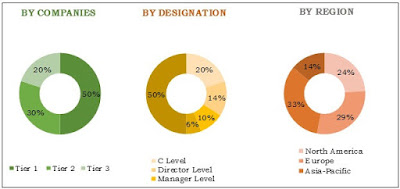
                                               Breakdown of Primary Respondents

Flour Market Analysis and Industry Forecast In 2017-2022

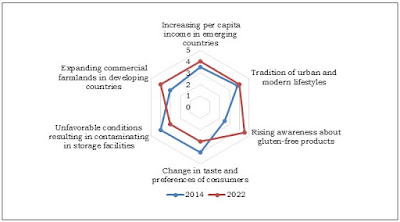
The growth in population coupled with per capita income has increased the demand for flour, which has further raised the production of flour. Change from traditional to urban and modern lifestyles of consumers has increased the demand for various types of flours in the preparation of fast foods items. Moreover, rise in health concerns for high-protein flour provides an impetus for flour millers to produce gluten-free flour alternatives. Change in taste and preference of consumers as well as dietary concerns for manufacturers to develop differentiated products have impacted the overall sales. Owing to improper warehousing influences, the flour industry faces major problems in the form of contamination of the food grains. Expansion of commercial farmlands and growth of aquatic feed industry in Asia-Pacific impact the application of flour in the form of animal feed.
 
Top Factors Impacting the Global Flour Market

Flour Market Analysis and Industry Forecast In 2017-2022

Tradition of urban and modern lifestyles

Rise in urban and modern lifestyle has increased the demand for various types of flours in the preparation of fast foods such as pizzas, donuts, fried meat items, and burgers. Flours are used as a principal ingredient in the making of bread, bakery items, corn-based coating of fried food. Moreover, the increase in number of fast food restaurants also boosts the market growth.

Rise in awareness about gluten-free products

Increase in health concerns for high-protein flour gives rise to demand for flour millers to make product innovation by using gluten-free flour alternatives such as maize flour, rice flour, soya flour, and corn flour. Private flour millers in Asia-Pacific have initiated the private players to increase their production capacity and innovative product offerings owing to less stringent regulations of government control on the flour industry. Increase in average selling price for flour in most of the countries has positively impacted the growth of market.

TOP IMPACTING FACTORS

Segment Overview

The global flour market is segmented based on raw material, application, technology, and geography. Based on the raw material, it is divided into wheat (including durum flour), rice, maize (including corn flour), and others (including oat flour and rye flour). On the basis of application, it is categorized into bread & bakery products, noodles & pasta, animal feed (including pet food), wafers, crackers & biscuits, non-food application (including bio-plastics, biomaterials, glue), and others (including roux, baby food). Based on technology, it is bifurcated into dry technology and wet technology. Geographically, it is analyzed across North America, Europe, Asia-Pacific, and LAMEA.

Top winning strategies

The winning strategies described below are a result of the analysis performed on company profiles of key players in the market. The data obtained through press releases by the companies has limited scope to publicly available information. The key strategies tracked from the recent developments of the companies in this industry include:

Product launch: Flour with higher efficiencies for different innovations is introduced in the market.
Acquisition: Takeovers are implemented by market leaders to strengthen their reach to customers or enhance technical capabilities.
Agreement and partnership: The leading players are signing supply & sales agreements and plant manufacturing partnerships to capture major market share and compete with other players.

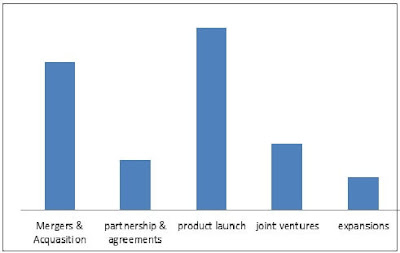
TOP WINNING STRATEGIES IN THE FLOUR MARKET (2013-2016)
Flour Market Analysis and Industry Forecast In 2017-2022

The market is driven by the product launch strategy, accounting for 38% of the overall strategies. Acquisitions, agreements, partnerships, joint ventures, and expansions are other prominent strategies adopted by key players to remain competitive in the market.

Product launches

Companies launch new products to increase their market penetration. About 38% of the studied strategies were product launches in the flour industry. Bread & bakery products, noodles & pasta, animal feed (including pet food), wafers, crackers & biscuits, non-food applications (including bio-plastics, biomaterials, glue) are gaining increased traction across world, which has led to increased number of flour manufacturers. Key players such as Ardent Mills, Archer Daniels Midland Co., Associated British Foods plc, ConAgra Foods, Inc., General Mills Inc., Hindustan Unilever Limited, Willmar International Limited, and Cargill enhance their product portfolios by launching flour with different qualities for different applications. For instance, in 2016, Ardent Mills announced its intent to acquire the Mondelz Canada flour mill, located in Mississauga, Ontario, Canada. The mill produces hard and soft wheat flour for its Canadian bakeries and a number of food manufacturing customers. The transaction is expected to close in the next few weeks.

In addition, in 2015, Ardent Mills, the premier flour-milling and ingredients company, partnered with the Colorado Rapids of Major League Soccer (MLS) for a season-long giving program to benefit Food Bank of the Rock. Increased number of consumers are on the lookout for healthier foods that are made with natural ingredients, and have a good taste. ADM is already helping customers meet that growing demand with its comprehensive portfolio of ingredients and flavors. Currently, it is expanding its portfolio even further by offering customers worldwide with a wide array of great stevia and monk fruit sweeteners. They are pleased to partner with GLG, which has a demonstrated advantage in developing non-GMO stevia varietals and a pipeline of future innovative products.

Acquisitions

Around 31% of the companies analyzed adopted acquisition as their key strategy to gain expertise in the field of flour industry. For instance, in 2015, Cargill expanded its feed formulation expertise through acquisition of Format International Ltd, a leading global feed formulation software company with more than 30 years of experience and more than 5,000 users across 93 countries. Format International specializes in the design, authoring, and marketing of recipe optimization, ingredient allocation, and food & feed formulation solutions for the animal feed, aqua feed, pet food, human food, premix, and other industries.
         
Agreements and partnerships

Companies are entering various types of agreements and partnerships such as supply & sales agreements and plant manufacture partnerships to serve their customers in a better manner and increase market outreach. Leading market player, General Mills, recently announced a strategic sourcing partnership with the largest organic cooperative in the U.S. that will help about 20 dairy farms add around 3,000 acres to organic dairy production over the next three years.

Joint venture

Companies are collaborating with other companies to enter into a joint venture to create one of the leading FMCG companies. Leading market player, Willmar International Limited proposed to form a joint venture with both Adani Wilmar and Ruchi Soya, contributing their procurement, marketing, sales, and distribution businesses together (for specified products) with their respective stables of leading brands.

Business expansions

Hindustan Unilever Limited (HUL) recently announced that it signed an agreement for the sale and transfer of its bread & bakery business under the brand “Modern” to Nimman Foods Private Limited, an investee company of the Everstone Group, for an undisclosed consideration. HUL’s decision to divest is in line with its strategy to exit non-core businesses while continuing to drive its growth agenda in the core packaged foods business.

Top investment pockets

Currently, bread & bakery products segment has witnessed large-scale adoption of flour, owing to increase in demand for bread. Moreover, rise in government support fuels the need for flour products. Noodles & pasta, wafers, crackers & biscuits, animal feed, and others are other popular segments in the global flour market. The rapid growth of flour in these applications is expected in subsequent years due to rising demand for flour and need for higher quality flour.

Increase in adoption of flour in bread & bakery products and noodles & pasta is expected to rise with highest market share and are identified as the profitable targets for investment. As compared to the other segments, these applications possess larger market size by value. Other emerging applications such as wafers, crackers & biscuits, and animal feed are expected to witness good growth in the coming years. However, these applications currently possess small market size, in terms of value. Other applications including non-food application (including bio-plastics, biomaterials, glue) and others (including roux and baby food) are at emerging stage in the market; however, they are projected to grow rapidly in the future.
 
TOP INVESTMENT POCKETS
Flour Market Analysis and Industry Forecast In 2017-2022

Key players operating in the global flour market are Ardent Mills Canada, Archer Daniels Midland Company, Associated British Foods plc, ConAgra Foods, Inc., General Mills Inc., Hindustan Unilever Limited, Hodgson Mill, ITC Limited, King Arthur Flour Company, Inc., and White Wings and Willmar International.

Other players (not included in this report) in the flour market involved in the manufacture and supply of flour include US Durum Milling Inc., Hayden Flour Mills, Sunrise Flour Mill, North American Millers Association, Grain Craft, To Your Health Sprouted Flour Co., Heartland Mills Inc., The Birkett Mills, ADM Milling Co., Horizon Milling, Satake USA, and Fairheaven Organic Flour Mill.

FLOUR MARKET KEY BENEFITS

· The study provides an in-depth analysis of the flour market with key drivers, restraints, and opportunities with impact analysis to elucidate the imminent investment pockets.
· Current and future trends are outlined to determine the overall flour market potential and single out profitable trends to gain a stronger foothold.
· Extensive analysis is conducted by following key product positioning and monitoring the top competitors within the market framework.
· Quantitative analysis of the current market and future estimations through 2014-2022 are provided to showcase the financial competency of the market.
· Key players are profiled and their strategies are analyzed thoroughly, which helps in understanding competitive outlook of the global market.

FLOUR MARKET KEY SEGMENTATION

BY RAW MATERIAL

· Wheat (Including Durum Flour)
· Rice
· Maize (Including Corn Flour)
· Others (Including Oat Flour and Rye Flour)

MARKET BY APPLICATION

· Bread & Bakery Products
· Noodles & Pasta
· Animal Feed (Including Pet Food)
· Wafers, Crackers, & Biscuits
· Non-Food Application (Including Bio-Plastics, Biomaterials, Glue)
· Others (Including Roux, Baby Food)

BY TECHNOLOGY

· Dry Technology
· Wet Technology

BY GEOGRAPHY

· North America
U.S.
Canada
Mexico
· Europe
Germany
UK
Rest of Europe
· Asia-Pacific
Japan
China
Rest of Asia-Pacific
· LAMEA
Latin America
Middle East
Africa

How to Get in Touch with Zhengzhou Double lion Flour Mill Manufacturer