显示标签为“flour mill machinery for sale”的博文。显示所有博文

2017年9月7日星期四

How To Start a Small Scale Flour Milling Business?

Almost all the junk foods we eat these days are made from flour; Cake, Burger, Pizza, Doughnut, name them, are all made from flour. There are different types of flours and each of type of flour is dependent on the raw material used to produce the flour.
For instance, wheat flour is made from wheat, corn flour is made from corn/maize; then there are others like rice flour, cocoyam flour and yam flour and my guess is that you know the raw materials each of these types of flour are made from.
Starting a flour company is a very profitable business that can break even after a few years due to the high demand for flour by companies that use flour as raw material to produce other finished products.
Are you planning to start a small scale flour milling business? Well, starting and running a milling business is not an easy task. Despite the high returns that this business can yield at the end of the day, there is a lot that you need to do in order to rise to the top. There are a number of things you need to know before opening the doors of your small scale flour milling business in any part of the city. Here are simple steps that will get started without going through much hassle over the same.
How To Start a Small Scale Flour Milling Business

The Plan of Starting a Flour Milling Business


1.Training on How to Handle the Machineries for Production

Unless you have worked in a flour mill before now, you need to get the basic training on how to handle the machineries used in the grinding and further production of the raw materials into finished flour. You also need to know other ingredients that are added to get the final result.

2.Register Your Business as a Company:
You may not start out as a massive flour mill, but you have a dream of expanding the company to a flour mill one day, so you need to register your business as a company; preferably a limited liability company. This also gives you the privilege to patent any new flour product you invent to your company’s name.

3.Lease a Space for Your Factory
When you are done with the formal registration, you have to look for a space to buy or rent as your factory complex. A basic flour mill doesn’t require much space to get started.
You need mainly a place to keep the raw materials, a space for your machineries, a space to keep the processed flour for packaging, and the space for the final packaging of the flour. The location of the factory should be easily accessible for easy transport of raw material into the site and easy shipping out of packaged flour to customers.

4.Purchase Equipments and Materials
Once you get the space for the factory, it’s time to buy the equipments and machineries you will need for production. Part of the need for going for training is to know which equipments are vital for the product of flour and how to use each of them. You can also lease machineries if the company is running on a very tight budget, but endeavor to purchase your own set ones you make enough money.

5.Source for Raw Materials
It is time to scout for raw materials you need for production. As I mentioned above, the raw material you will need depends on the type of flour you are producing. A good place to source for raw materials is from farmers that cultivate the raw materials in commercial quantities.
If you have the extra expanse of land, you may decide to cultivate your own raw material which may be cheaper but more stressful with the whole cultivation, nurturing, waiting to mature and finally harvesting processes. So it is much better to purchase from farmers.

6.Find Customers for Your Products
At this stage, I assume that the first set of flour production has been done and packaged; so you have to look for buyers for the finished product.
A good way to do this is to get a list of bakeries, food processing companies and pharmaceutical companies near your location; write a proposal to them that you have a flour company that can supply them with any quantity of flour they require.
Also include a small sample of the flour you made to them for them to see the product you have and finally, let them know that you can produce other types of flour on order (if you have the equipment to produce various types of flour).
This is all you need to know about starting a flour production mill. Please note that you need to get certification from the organization responsible for checking the quality of food products in your location, as it will help to increase the authenticity of your product to your customers.
Also, remember that the packaging process includes using a bag or sack that is branded with your company’s name and logo to package your flour; as this helps to advertise your products to anybody that comes in contact it.

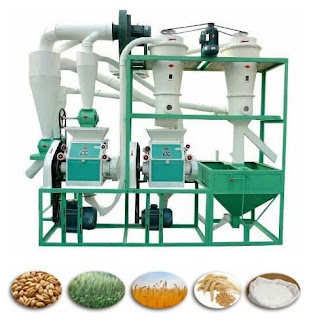
Here are some basic requirements of plant & machinery

  • Bucket elevator
  • Drum sieve pre-cleaning machine
  • High-frequency vibration cleaning sieve
  • Wheat cleaning & drying machine
  • Destoner
  • Wheat scourer
  • Permanent Magnetic Drum
  • Atomizing Dampener
  • Pneumatic flour mill machine
  • Flour cleaning machine
  • Plansifter
  • Square plansifter
  • Bran scourer
  • Bran Brush Machine
  • Centrifugal fan
  • Pulse dust collector

Generally, a flour mill project comes with a lot of customization. According to your investment capacity and desired output quantity, you must install the machinery. Additionally, you will need to have testing equipment and packaging machinery.

How To Start a Small Scale Flour Milling Business

 Flour Production Process & Raw Materials
The production process of each item is little bit different. You can source the manufacturing technology from the Govt. department in exchange of certain fees. However, here we put basic steps of flour production.
First of all, clean the wheat grains thoroughly to remove dust, stone and other foreign matters. Then temper the grains before grinding by treating with water so that the bran is separated from the endosperm.
Crush the wheat between corrugated rollers (Break rolls). It is a long process and may contain several breaks. The stock contains pieces of endosperm and bran and the stock from the last break is principally bran.
The middlings contain endosperm, bran and germ which are then successively classified and some of the bran removed are sent to reduction rollers. These are smooth rollers, but like the break rolls they are graduated so that successive reduction becomes finer and finer.
After each reduction, sifters separate the flour, middling and stock. And you have to continue the process until you can remove the most of the endosperm as flour. Additionally, you have to separate the most of the bran in the sifters.
The major required raw material is wheat blended in different proportion. Additionally, you have to procure the packaging materials for flour mill business.

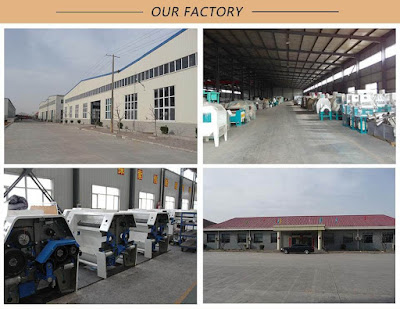
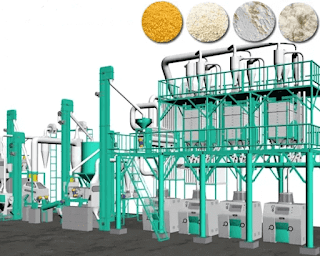
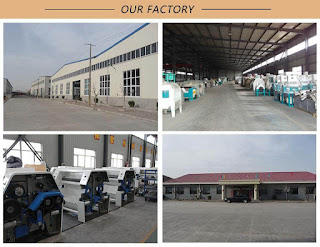
Zhengzhou Double-lion Grain & Oil Milling Machinery Co.,ltd. is dedicated in flour mills and flour milling lines design & manufacturing. Cooperating with Henan University of Technology (Former Zhengzhou Grain College) which have abundant talented person and science advantage, it has carried out the new technological research and application of oil machinery, flour milling machinery, coarse cereals machinery and feed machinery, etc., and transformed the latest scientific achievements into productive forces to obtain good social and economic benefit. Many foreign friends have established long-term cooperative relationship with us. Our company has wide milling machines range and competitive price, looking for sales agents overseas!

How To Start a Small Scale Flour Milling Business

Need guidance to build a maize flour plant? Please contact us, our engineer will give you professional guidance and suggestion.
Type: wheat flour mill machineflour mill plantssmall scale flour processing plantcorn flour mill machine, grain mill, maize machine. Get in touch with us. 

How to Get in Touch with Zhengzhou Double lion Flour Mill Manufacturer
Email: info@zzdoublelion.com
Whatsapp: +8613849022317 (Sophia)   
Wechat: +8613849022317 (Sophia)  
Add:Lotus street NO.100,Hi-tech development zone, Zhengzhou, Henan, China.


2017年9月5日星期二

Why Indonesia’s Appetite for Wheat Is Growing

Wheat consumption in Indonesia is growing rapidly, supported by an expanding middle class that has taken a liking to western cuisine. Indonesians still eat more rice than most other people in the world, but a fundamental change in the local diet is undeniable, as more and more consumers switch to toast for breakfast, pizza for lunch or doughnuts for dessert. Increasing demand for wheat-based foodstuffs in Indonesia presents exciting opportunities for investment in the wheat milling and food processing industries.

Why Indonesia’s Appetite for Wheat Is Growing


Instant noodles and talking bread
The single main driver of rising wheat consumption in Indonesia is the growing popularity of instant noodles – particularly among young city-dwellers who appreciate the convenience of ready meals. More than half of Indonesia’s wheat flour is turned into noodles. Indonesia is the second-biggest market for instant noodles and home to the world’s largest instant noodle producer, Indofood Sukses Makmur. Trade policies aimed at protecting local farmers against rice imports have boosted domestic rice prices, ironically adding to the popularity of wheat-based instant noodles as a cheap alternative to traditional rice dishes.
Meanwhile, retail chains such as Singapore-based BreadTalk and Indonesia’s J.CO Donuts & Coffee are doing their part to expand the local bakery market, which consumes large amounts of wheat flour as well.

Why Indonesia’s Appetite for Wheat Is Growing

A market dependent on imports
The bulk of Indonesia’s wheat supply comes from Australia, followed by Canada and the United States. The vast majority of shipments are in the form of grain delivered to mills in Indonesia. Wheat grain imports were valued at $2.3 billion in 2012, according to figures from the Central Statistics Agency (BPS). By contrast, Indonesia only bought $188 million worth of wheat flour from abroad in 2012. This still makes Indonesia one of the largest wheat flour importers of the world.
The government aims to limit imports of wheat flour to the necessary minimum. In December 2012 it imposed a 20% temporary emergency tariff to protect Indonesian millers and in the summer of 2013 officials were mulling more permanent measures. Its trade policies put the government at loggerheads with Turkey and Sri Lanka, the predominant exporters of wheat flour to Indonesia in 2012. Turkey has threatened to take WTO action against Indonesia’s flour import policies.

Growth potential far from exhausted
Wheat played an insignificant role in Indonesia until the late 1960s, but since then has been on a rapid ascent. Wheat imports grew from 170 thousand (MT) in 1967 to 6.5 million MT in marketing year 2011/2012, according to data from the United States Department of Agriculture. Per-capita consumption of wheat flour roughly doubled over the past two decades, but at just a little more than 20 kg per year it is only a fraction of consumption in many more developed economies, which highlights the market’s growth potential.
There have been isolated attempts at cultivating wheat in Indonesia despite the tropical climate, but none of those efforts have progressed beyond the experimental stage. The industry will remain fully dependent on imports in the foreseeable future.

Good news for wheat millers
Indonesia’s protectionist stance on wheat flour imports is actually good news for the domestic milling industry, which will require substantial investment to meet future demand for flour. Tapping into this potential, FKS Indonesia, Malaysia’s Malayan Flour Mills and Toyota Tsusho from Japan formed a joint venture, PT Bungasari Flour Mills Indonesia, with a first plant expected to commence operations in West Java in 2014. At the beginning of 2013, Mitsubishi Corporation of Japan purchased of a 10% stake in Sriboga Raturaya, another leading player in the wheat flour sector in Indonesia, in order to tap into the growing market potential. Singapore-listed Wilmar International, for its part, announced the construction of two wheat mills in East Java.
New market entrants in the milling business need to take into account the fact that they are up against competition from well-integrated local players, including the giant Bogasari Flour Mills, a subsidiary of Indofood. On the bright side, the expanding market and the need for more modern and efficient mills should leave room for future growth. The spike in food prices in 2013 should also, in principle, compel the government to ensure a level playing field in the milling industry, which is currently characterized by a small number of companies.

Opportunities in food processing
Further downstream, appealing business opportunities await investors in food processing and retail. While they will hardly displace rice as the country’s staple diet, bread, cereals, biscuits and cakes are carving out growing markets for themselves in Indonesia. The fact that per-capita consumption of these products is still very low means that their growth potential is all the higher. Government officials have been urging Indonesians to diversify their carbohydrate intake away from an over-reliance on rice, but the more powerful force behind changing culinary habits is likely a general westernization of Indonesian food. Foods that do not need cooking, such as breakfast cereals and bread, trump rice when it comes to accommodating the urban lifestyles of office workers.
Sales of bread and pastries rose by 12% to 30 trillion RP in 2012, according to the Indonesian Bakery Association (APEBI). While Jakarta and Surabaya are already well served with bakeries and patisseries, up-and-coming cities such as Medan and Makassar still harbour substantial growth potential. A number of highly successful franchises with strong brand identities point the way to success in Indonesia’s emerging bakery market. Breakfast cereals appeal to Indonesians for their presumed health benefits over rice. Many cereals are still imported to Indonesia and sold at prices significantly higher than in their originating countries. The premium that a small but growing consumer segment is happy to spend on cereals suggests that in-country producers can achieve significant margins and market share.
Due to the fact that sales of wheat-based foods rely to a large extent on middle class consumers, they should prove quite resilient to economic downturns or rising inflation. The growth of the wheat product market in Indonesia, therefore, is a force to be reckoned with for years to come.

Why Indonesia’s Appetite for Wheat Is Growing

Zhengzhou Double-lion Grain & Oil Milling Machinery Co.,ltd. is dedicated in flour mills and flour milling lines design & manufacturing. Cooperating with Henan University of Technology (Former Zhengzhou Grain College) which have abundant talented person and science advantage, it has carried out the new technological research and application of oil machinery, flour milling machinery, coarse cereals machinery and feed machinery, etc., and transformed the latest scientific achievements into productive forces to obtain good social and economic benefit. Many foreign friends have established long-term cooperative relationship with us. Our company has wide milling machines range and competitive price, looking for sales agents overseas!
 
Why Indonesia’s Appetite for Wheat Is Growing

Need guidance to build a maize flour plant? Please contact us, our engineer will give you professional guidance and suggestion.
Type: wheat flour mill machineflour mill plantssmall scale flour processing plantcorn flour mill machine, grain mill, maize machine. Get in touch with us. 

How to Get in Touch with Zhengzhou Double lion Flour Mill Manufacturer
Email: info@zzdoublelion.com
Whatsapp: +8613849022317 (Sophia)   
Wechat: +8613849022317 (Sophia)  
Add:Lotus street NO.100,Hi-tech development zone, Zhengzhou, Henan, China.
 

2017年8月27日星期日

What About the Grain and Flour Market In Kenya ?

The number of registered millers in Kenya is 103. Estimated total installed corn milling capacity is 1,62-1,77 million tons. Production capacity of the largest 19 mills in the country is equal to 85-90 percent of total corn milling capacity. Most of the mills in Tanzania are village mills in rural areas. There are approximately 45-50 rice mills and 70-80 corn mills in the country.

The Kenyan maize and wheat flour market will show strong growth (CAGR of 7.3%) over the next 5 years as changing consumer preferences for wheat flour, improving retail accessibility, and increasing market sophistication drive demand. Worth $738.1 million in 2015, the Kenyan wheat flour market is expected to reach $1.15 billion by 2020 at a CAGR of 9.2%, accounting for 47.2% of the market by 2020. In comparison, the commercial maize flour market is expected to increase from $315.8 million in 2015 to $444.0 million by 2020 at a CAGR of 7.1%, while posho maize flour will increase from $658.2 million in 2015 to $840.2 million by 2020 at a CAGR of 5.0%.

One of the biggest countries of Eastern Africa, Kenya has also one of the most rapidly increasing populations. Its capital is Nairobi, one of the largest cities of the region. Neighboring Ethiopia in the North, Sudan in the Northwest, Uganda in the West, Tanzania in the South and Somali in Northeast, Kenya lays through Indian Ocean in the East. Recording increasing grain production, Kenya imports grain in order to meet increasing consumption amount, especially of wheat.


What About the Grain and Flour Market In Kenya?

General Economic Outlook
It is a general opinion that Kenya, which became independent from Britain on 12 December 1963, will have a significant role in uniting the country with local business world, transportation network and global trade. In Kenya, which has a population of 45,9 million (2015 forecast), population becomes intense largely in center and western region covering efficient areas in terms of agriculture. At the same time, Kenya is facing domestic competence in the region. This competence is largely resulted from Tanzania which made economic reforms for market economics and Uganda which has showed a significant economic growth in the recent years. Members of Eastern Africa Council (EAC), these three countries became more and more dependent to each other as a result of customs unions on 1 January 2005.

According to the data dated 2011, the share of industry in GDP is 14,9 percent and it is 66,1 percent for services. Nearly 75 percent of employment is in agriculture and 25 percent in industry and services. Share of services in the country’s economy is higher than other countries. The reason is that the country has lively tourism industry and fertile lands instead of mines as natural sources in contrast to the other African countries. Communication, banking and tourism industries become prominent in services industry. Trade and transportation are also other sub-industries contributing to services industry.

Industrialization is one of the significant targets of the country; but after gaining independence, there has been any significant movement in this area. Industry has centered on the three large cities Nairobi, Mombasa and Kisumu. In manufacturing industry, milling, beer manufacturing, milk and sugar refining sectors are prominent. Kenya produces petroleum products through refining in Mombasa and has a significant cement production capacity.

THE PLACE AND IMPORTANCE OF AGRICULTURE 
Agriculture industry in Kenya covers 24,5 percent of GDP as to the estimates in 2011. Agriculture provides employment directly and indirectly. Agriculture industry largely consists of small businesses that families operated for their own needs or commercial reasons. 77 percent of working class is employed in agriculture. Agricultural products are exported mostly as raw or semi-processed and agricultural exports covers 22 percent of total export amount.

Agriculture industry in the country has a labor-intensive system. Agricultural production is highly dependent on weather conditions. There are empty areas in the country, small family businesses operating on 0,9 and 3 hectare forms the greater part of agricultural businesses. 70 percent of grain areas in the country are cultivated manually, 20 percent is with animal force and remaining 10 is with tractor; and the production is largely dependent on rainfall.
Fertile agricultural lands of Kenya are located on middle or western parts of the country. Kenya is a significant producer of cabbage, onion and mango as well as tea and coffee. Agriculture is done in areas of less than 2 hectare in Kenya. These small farms are equal to 75 percent of production in the country. In most of the small farmers, corn, potato, banana, beans and peas are cultivated.

GRAIN PRODUCTION AND CONSUMPTION IN KENYA 
When the data of US Department of Agriculture, Foreign Agricultural Service (USDA FAS) examined, it is seen that the highest amount in grain production of Kenya belongs to corn. Rising to 3,2 million tons in 2006/07 season, corn production declined below to 3 million in the following three season and is realized as 3,4 million tons by increasing again in 2010/11. Recorded as 3,3 million in 2011/12 and 2012/13 season, corn production reduced to 2,8 million tons in 2013/14 season. It is expected that corn production which is realized as 2,6 million tons in 2014/15 season will be 2,8 million tons in 2015/16 season.

Corn consumption of Kenya is parallel with corn production. However it is seen that production amount is not sufficient with consumption amount. Corn consumption which increased to 3,2 million tons in 2006/07 reached to 3,4 million tons in 2008/09 and 3,7 million tons in 2011/12. Corn consumption which reduced to 3,6 million tons in 2012/13 and 2013/14 seasons increased to 3,7 million tons in 2014/15. It is forecasted that this amount will remain in 2015/16 season.

The second highest amount in Kenya’s grain production belongs to wheat. Increasing to 225 thousand tons in 2005/06 season, wheat production reduced below to 250 thousand tons in the following two seasons although it increased to 300 thousand tons in 2006/07. Following an unsteady graphic, wheat production reached 512 thousand tons with a significant increase in 2009/10 and reduced again in 2010/11 and 2011/12 seasons. Increasing to 442 thousand tons in 2012/13 and 486 thousand tons in 2013/14, wheat production was recorded as 415 thousand tons in 2014/15. Forecasted production amount for 2015/16 is 420 thousand tons.

It is seen that wheat consumption of Kenya gradually increases and exceeds production amount. Consuming less than 1 million tons between 2003/04 and 2008/09, Kenya gradually increased its consumption amount which was 1 million tons in 2008/09 and reached a consumption amount of 1,8 million tons in 2013/14. Consumption amount which was recorded as 1,8 million tons in 2014/15 season is forecasted to reach to 1,9 million tons in 2015/16 season.

Another important product in grain production and consumption of Kenya is rice. Following very low amounts in rice production, Kenya reached highest production amount with 81 thousand tons in 2012/13 season between 2003/04 and 2014/15 seasons. Producing 10 thousand tons of rice in 2014/15 season, Kenya is expected to reach a production amount of 75 thousand tons in 2015/16 season.


Rice consumption of Kenya is much higher than production amount. Reaching to 335 thousand tons in 2006/07, rice consumption reached to 400 thousand tons in 2010/11. Increasing steadily since 2010/11 season, rice consumption reached to 495 thousand tons in 2014/15 season. Forecasted consumption amount is 500 thousand tons in 2015/16 season.

Production amount of grain products such as sorghum, barley and millet is low in Kenya. Sorghum production amount was between 120 and 167 thousand tons from 2010/11 to 2014/15 seasons and it is forecasted that 140 thousand tons of sorghum will be produced in 2015/16 season. Sorghum consumption amount slightly exceeds production amount. Barley production and consumption amount is below 100 thousand tons.
What About the Grain and Flour Market In Kenya?


GRAIN TRADE IN KENYA 
In Kenya where grain consumption increases gradually, grain import amount increases too as production cannot meet consumption. Wheat is the most imported product in the country where grain trade is import based. Wheat import which is realized as 400 thousand tons between 2003/04 and 2004/05 seasons increased to 1,2 million tons in 2009/10 season and 1,5 million tons in 2011712 seasons. Declining to some extent in 2012/13 season, wheat import reached to 1,4 million tons in 2013/14 and 1,5 million tons in 2014/15 season. Forecasted import amount in 2015/16 season is 1,6 million tons.

The second most important product in grain import of Kenya is rice. Rice import was realized as 200-300 thousand tons between 2003/04 and 2009/10 seasons; and recorded as 305 thousand tons in 2010/11 season. Rice import increased to 425 thousand tons in 2011/12 season and 420 thousand tons in 2014/15 season. Forecasted amount for rice import in 2015/16 season is 430 thousand tons.

Despite increasing corn production, Kenya increases corn import amount too in order to meet high corn consumption. Although corn import amount increases from time to time between 2003/04 and 2012/13 seasons, it stayed in low amounts. Being realized as 800 thousand tons in 2013/14 season, corn import reached to 900 thousand tons in 2014/15 season. Forecasted corn import amount in 2015/16 season is 1 million tons. The highest sorghum import amount of the last 11 season is reached with 109 thousand tons in 2012/13 season.


What About the Grain and Flour Market In Kenya?


FLOUR INDUSTRY IN KENYA
Most preferred grain product as staple food is corn in Kenya. Corn flour is produced mostly to make corn flour bread named “ugali”, bread, pancake, infant formula, biscuit and porridge. According to the “Staple Foods Value Chain Analysis Report” prepared by United States Agency for International Development (USAID), the primary miller group in the country is industrial corn millers with middle or high capacity.

The second one is small mills of which number is not known. 109 of these millers included in these two groups grinds corn and wheat, as it is stated. National Cereals and Produce Board of Kenya (NCPB) stated that the number of registered millers in Kenya is 103. Installed capacity of these mills is not exactly known; however estimated installed capacity for corn is 1,77 million tons per annum.

Grain Millers Association (CMA) estimated that total installed corn milling capacity is 1,62 million tons per annum. In the same report, it is stated that there are 19 mills with middle and high capacity and the capacity of them is 1,41 million tons. This is equal to 85-90 percent of total milling capacity. After corn, wheat is the most consumed product as staple food in Kenya. Wheat flour is mostly used for pan bread, chapati and home use. Millers in the country sell their products mostly in domestic market. Additionally, they are sold to large mills too.

Zhengzhou Double-lion Grain & Oil Milling Machinery Co.,ltd. is dedicated in flour mills and flour milling lines design & manufacturing. Cooperating with Henan University of Technology (Former Zhengzhou Grain College) which have abundant talented person and science advantage, it has carried out the new technological research and application of oil machinery, flour milling machinery, coarse cereals machinery and feed machinery, etc., and transformed the latest scientific achievements into productive forces to obtain good social and economic benefit. Many foreign friends have established long-term cooperative relationship with us. Our company has wide milling machines range and competitive price, looking for sales agents overseas!


What About the Grain and Flour Market In Kenya?

Need guidance to build a maize flour plant? Please contact us, our engineer will give you professional guidance and suggestion.
Type: wheat flour mill machine, flour mill plants, small scale flour processing plant, corn flour mill machine, grain mill, maize machine. Get in touch with us. 
 
How to Get in Touch with Zhengzhou Double lion Flour Mill Manufacturer
Email: info@zzdoublelion.com
Whatsapp: +8613849022317 (Sophia)   
Wechat: +8613849022317 (Sophia)  
Add:Lotus street NO.100,Hi-tech development zone, Zhengzhou, Henan, China.